



If anyone asks about my favorite flower, my answer is always spring flowers—the daffodils, tulips, and hyacinths that signal warmer weather is in our future. I like the bright bursts of yellow, orange, pink, and purple standing out against the winter drabness.
Given my love of spring flowers, seeing tulips in the Netherlands has always been on my wish list, and this year I visited the renowned Keukenhof Gardens.
Tulips have such a fascinating history. They originated in Central Asia, where the hot summers and harsh winters provided the perfect growing conditions. It’s thought that tulips grew wild before being cultivated in the Ottoman Empire. The sultans delighted in the colorful flower displays. From here, European diplomats and travelers saw the flowers and took bulbs home. Eventually, the bulbs arrived in the Netherlands, where everyone who saw them loved their bright cheerfulness as much as I do. The demand for tulips grew, especially once growers discovered that sometimes the color of the bulbs changed from one season to the next. This made them unpredictable and intriguing.
A craze, driven by wealthy collectors who coveted unusual colors and rarer varieties, saw the prices of bulbs grow to astronomical amounts. A single bulb of the most prized tulip—the Semper Augustus—reached 10,000 gilders, which was enough to purchase a house in Amsterdam! And as I mentioned, each purchase held an element of gamble because the flowers sometimes produced a different color from season to season.
Eventually, sanity prevailed, and the price of tulip bulbs fell, though not without sending some people broke.
So why was the Semper Augustus so desirable?
It was a white tulip with a mass of red flares on the petals. It was one of the “broken” tulips, which had petals in contrasting colors. Only a few growers possessed this bulb. This scarcity, of course, created demand and pushed up prices.

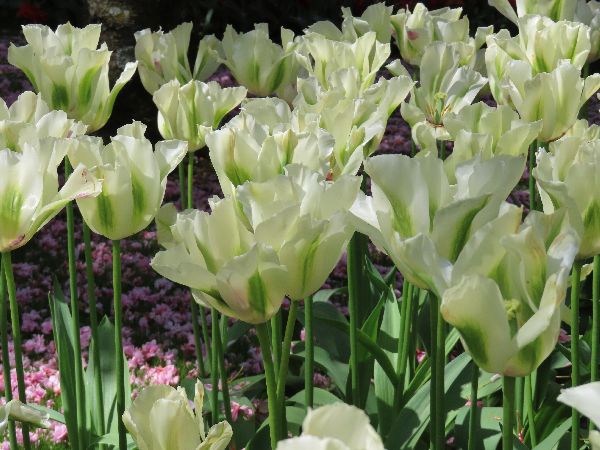
NOTE: This modern tulip looks a little bit like the Semper Augustus, but the original had more red than white.
The gamble didn’t pay off since some bulbs didn’t produce the beautiful white and scarlet flowers, and eventually, the line faded into obscurity.
It wasn’t until the 1920s that scientists discovered that this tulip species had a virus that caused each successive generation of bulbs to become degraded until the genetic line died out.
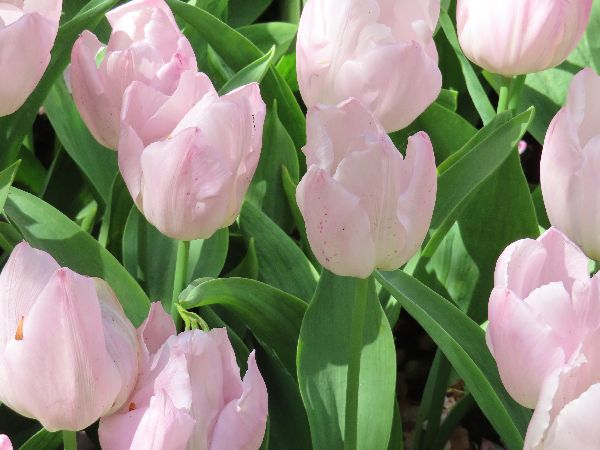
These days, growers have developed new varieties that are said to rival Semper Augustus. I certainly think the flowers are stunning, and I couldn’t stop taking photos during my visit to Keukenhof Gardens, near Amsterdam. Inspired by the beautiful displays, I’ve decided which bulbs I’ll be planting for next spring. If you guessed tulips, you’d be right!



Sources:
https://amsterdamtulipmuseum.com/pages/semper-augustus-most-famous-tulip
https://www.nationaltrust.org.uk/discover/history/gardens-landscapes/history-of-tulips
0 Comments